Precise Multi-Level Localization of Peripheral Arterial Blockages
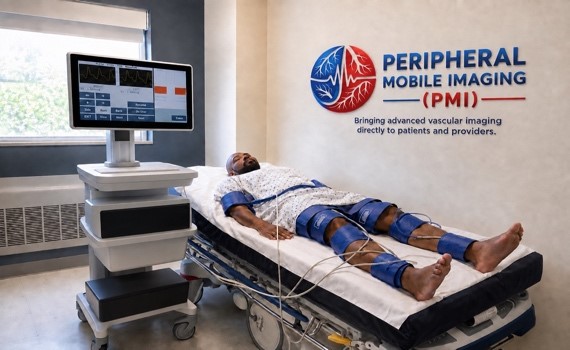
PERIPHERAL MOBILE IMAGING brings accurate physiologic arterial evaluations directly to physician offices, wound care centers, skilled nursing facilities, and patient homes across Maryland, Washington DC, and Northern Virginia.
We deliver tailored health plans and services to meet your unique needs.
The test is painless, requires no needles or radiation, and can be especially helpful for patients experiencing leg pain with walking, cold feet, numbness, non-healing wounds, or other symptoms of poor circulation.
Our medical approach
Segmental Pressure Studies
A segmental pressure study is a safe, non-invasive vascular test used to evaluate blood circulation in the arms or legs and help detect peripheral artery disease (PAD).
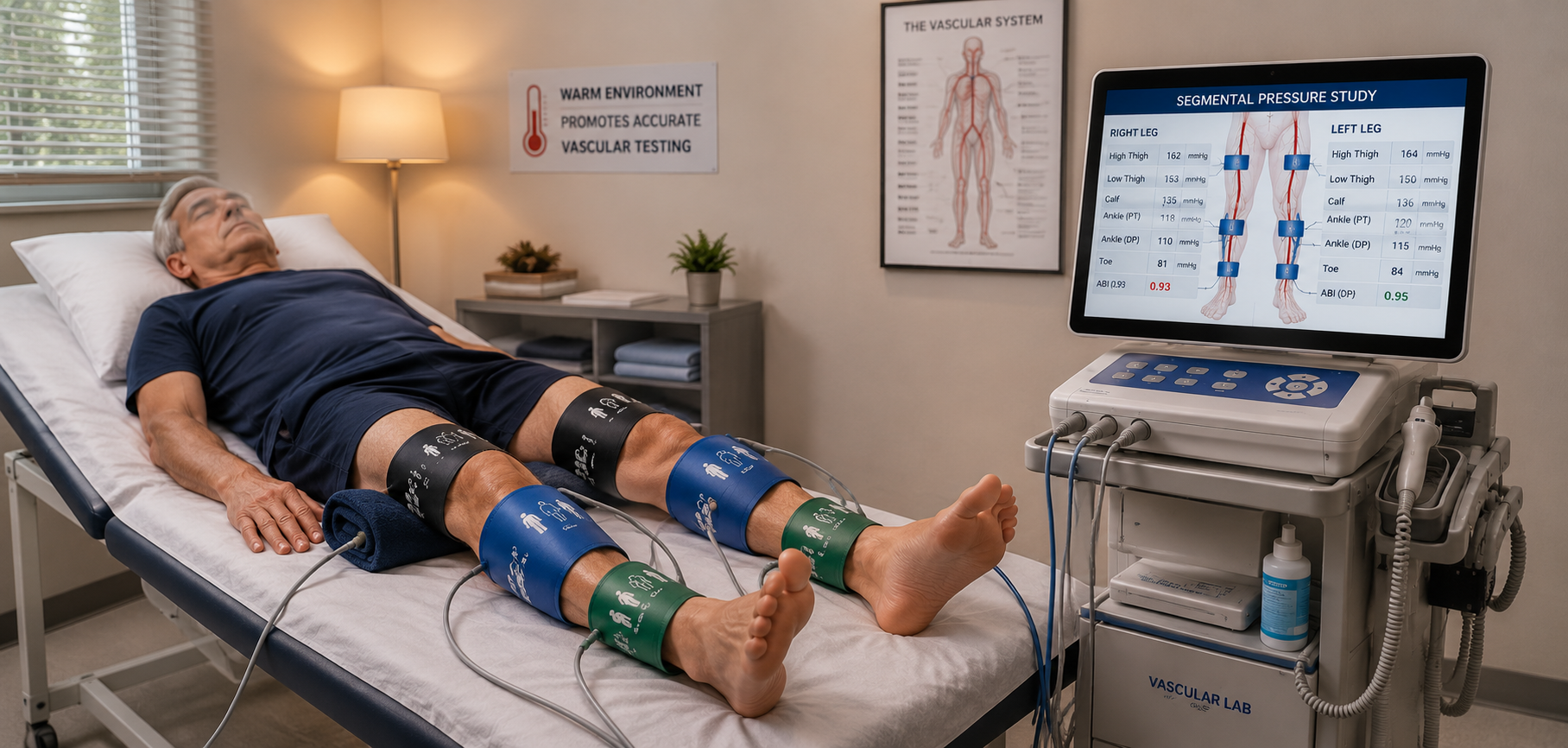
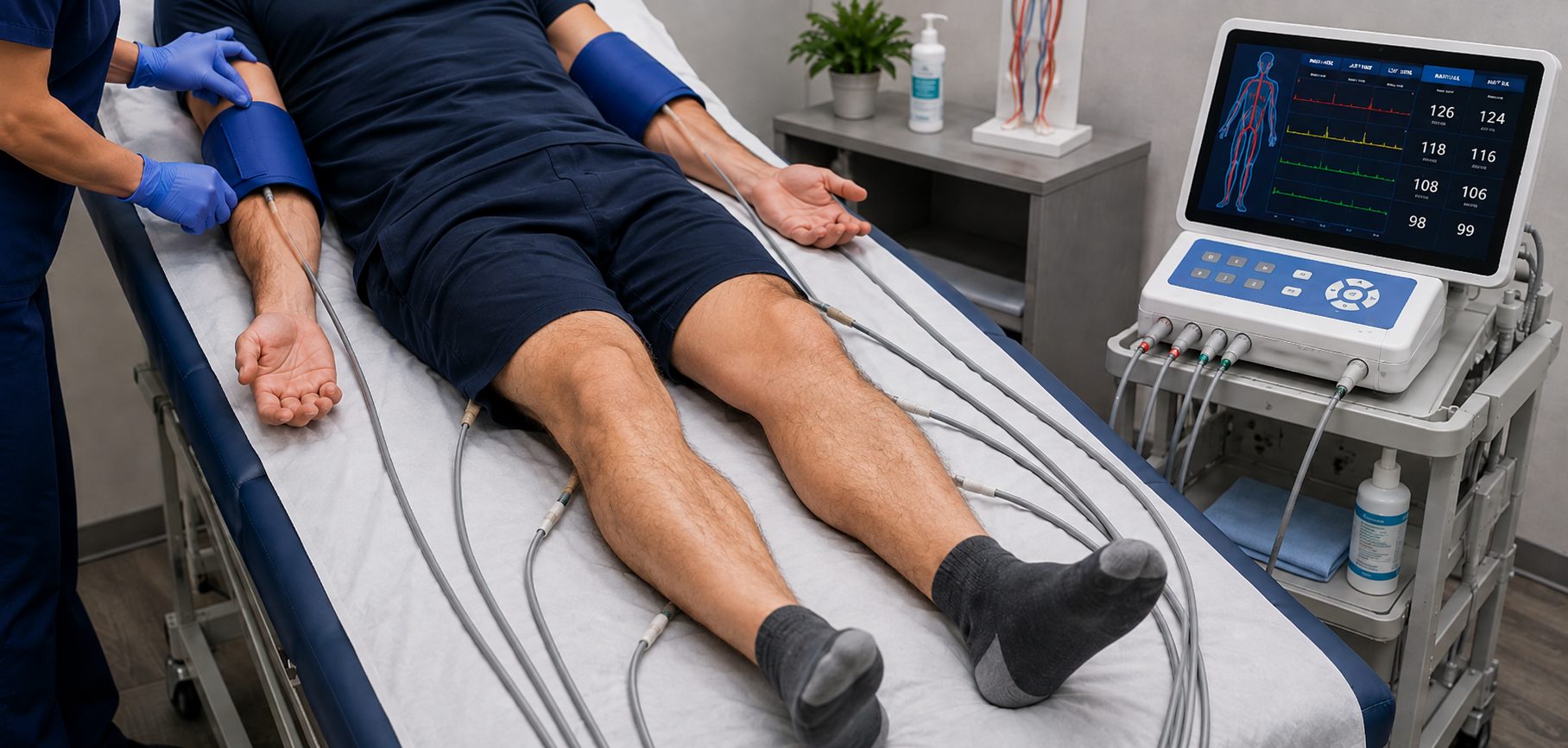
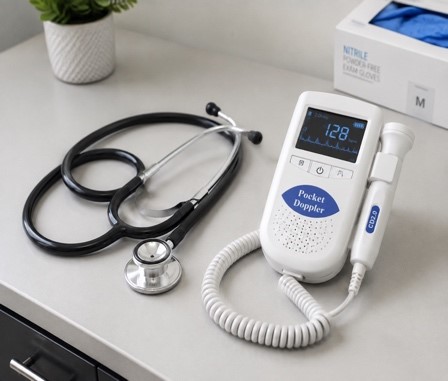
Blood pressure cuffs are placed at different levels of the extremities, and a small Doppler device is used to measure blood flow and pressures. By comparing pressures between different segments and with the arms, the test can help identify where arterial narrowing or blockage may be located and how significantly it is affecting circulation.
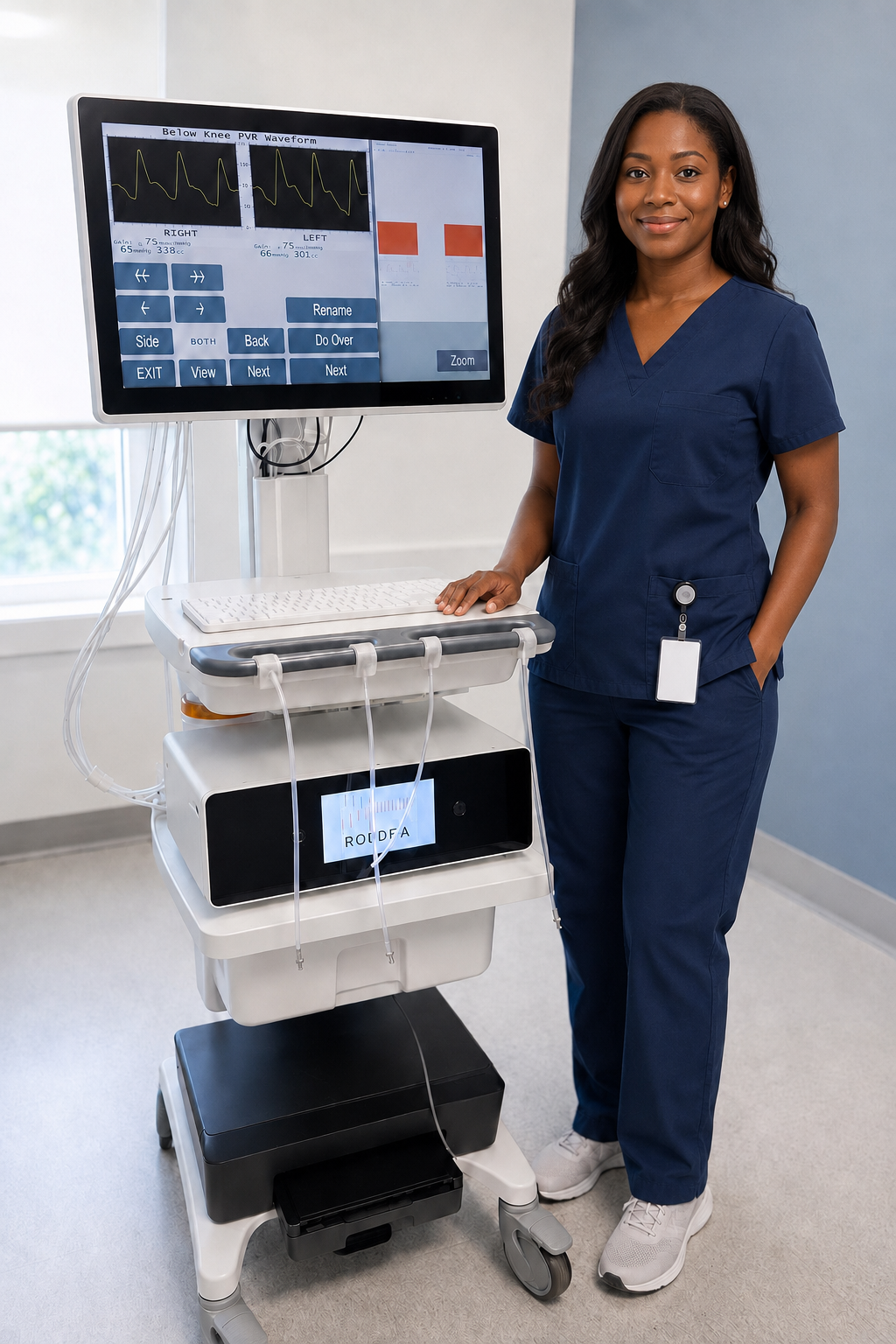
Segmental pressures may be performed along with an ankle-brachial index (ABI), pulse volume recordings (PVR), and Doppler waveforms to provide a more complete assessment of arterial circulation.
Pinpoints the specific level of arterial obstruction (e.g., thigh vs. calf level).
Objective Disease Severity
Provides quantifiable pressure drops and gradients to gauge severity.
Comfortable & Non-Invasive
Evaluates leg circulation safely without contrast dye or arterial catheterization.
Common Indications for PERIPHERAL ARTERIAL DISEASE (PAD)
Common Indications of Peripheral Arterial Diesese (PAD)
Patients may be evaluated for Peripheral Artery Disease (PAD) when they have:
Leg pain or cramping with walking (claudication)
Foot or leg pain at rest, especially at night
Non-healing wounds or ulcers of the toes, feet, or legs
Coldness of one foot or leg compared with the other
Weak or absent pulses in the lower extremities
Skin discoloration or trophic changes, such as shiny skin or loss of leg hair
Numbness or weakness in the legs or feet
Gangrene or tissue loss
Known atherosclerotic disease
Follow-up after angioplasty, stent placement, or lower-extremity bypass graft
Abnormal ABI (Ankle-Brachial Index) or other vascular screening results
Patients with risk factors such as smoking, diabetes, high blood pressure, high cholesterol, older age, and established cardiovascular disease may also be evaluated for PAD when clinically appropriate.
The patient rests comfortably in a supine position in a warm environment to ensure stable baseline vascular tone.
Cuff Placement
Specialized pneumatic blood pressure cuffs are wrapped around key limb levels (e.g., bilateral high thigh, low thigh, below knee, and ankle).
Doppler Signal Detection
Our Registered Vascular Technologist uses a continuous-wave (CW) Doppler probe over the posterior tibial (PT) and dorsalis pedis (DP) arteries to listen to arterial flow while inflating and deflating each cuff.
Pressure Gradient Analysis
Systolic pressures are recorded at each level, and gradient drops greater than 20–30 mmHg between adjacent segments are documented to identify blockages.
Duration
The procedure typically takes 30 to 45 minutes on-site.
Empowering Brands
Actionable Vascular Data Delivered to Your Practice
Peripheral Mobile Imaging delivers structured segmental pressure measurements quickly to help care teams formulate effective treatment or revascularization plans.